


Parent Related Wounds
Transactional Analysis (TA)
Parental Messages drivers (commands) en injunctions (prohibitions) – scripts.
Parental messages in Transactional Analysis (TA), developed by Eric Berne, are messages from childhood, beliefs originating from parents or authority figures, which influence our behavior and self-image. They are divided into drivers (commands) and injunctions (prohibitions), which together contribute to our life script—an unconscious, early-formed image that determines how we interpret situations and respond to them.
“The second problem people generally have is that they do not recognize what is actually happening, but are instead blinded and misled by their thoughts—the stories and movies their mind projects onto reality, based on scripts and identities formed in the past.”— John Welwood
Drivers (commands):
These are compelling “be” messages that offer conditional acceptance but cause stress if followed excessively. Examples:
- “Be perfect” (leads to perfectionism)
- “Hurry up” (leads to rushed behavior)
- “Be strong” (suppresses emotions),
- “Do your best” (leads to overachieving)
- “Make others happy” (leads to people-pleasing).
Injunctions (prohibitions)
These are negative “don’t” messages that impose limitations and often lead to self-sabotage. Examples:
- “Don’t be yourself” (leads to conformity)
- “Don’t feel” (suppresses feelings)
- “Don’t be close” (avoids intimacy)
- “Don’t exist” (leads to depression)
- “Don’t be a child” (suppresses playfulness).
Scripts
Based on drivers and injunctions, these form a narrative life story (e.g., “winner script” or “loser script”), which is decided early on and repeatedly played out in relationships, work, and decisions.
bron @grok
Transactional Analysis (TA) is a psychological theory developed by Eric Berne that examines the dynamics of human communication. It assumes that people function in three different “ego states”: the Parent, the Child, and the Adult. These states influence how we interact with others and how we understand ourselves. TA helps people gain insight into their behaviors and patterns so that they can develop healthier and more effective relationships. (AI)
I’m OK You’re OK – Thomas A. Harris
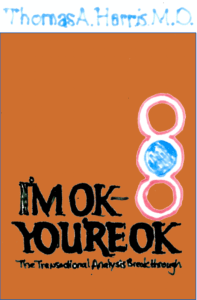
The book “I’m OK, You’re OK” emphasizes the importance of understanding and changing these roles to promote self-awareness and personal growth. Harris also discusses how people can develop healthier interactions by recognizing and changing dysfunctional patterns. Ultimately, the book encourages people to shift from a “child” mentality to an “adult” perspective, leading to greater emotional well-being and more authentic relationships. (AI)